
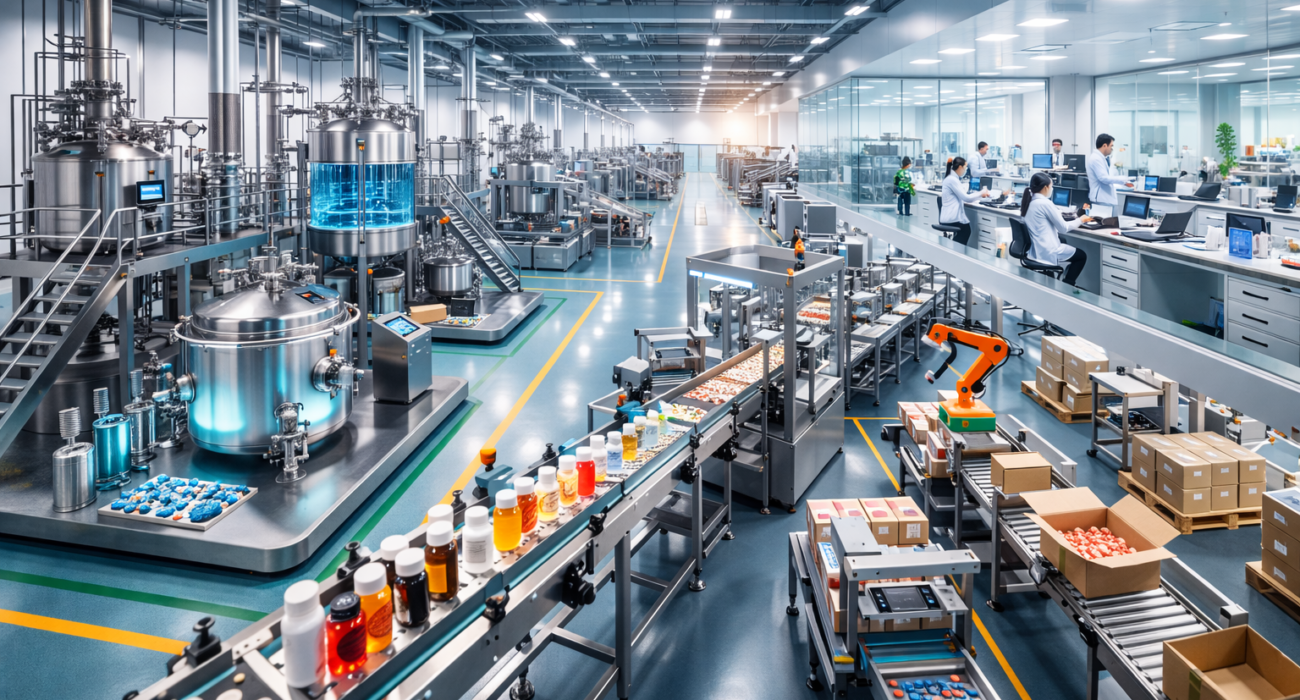
Pharmaceutical Manufacturing Industry – What It Really Looks Like Behind the Factory Gates
When someone searches pharmaceutical manufacturing industry, they’re usually not looking for textbook information.
They’re trying to understand how serious pharma production actually works in India — and how to choose the right manufacturing partner.
From outside, the pharmaceutical manufacturing industry looks impressive.
Large factories.
Multiple product lines.
Export claims.
Certifications on walls.
But real strength in this industry is not about appearance.
It’s about systems.
The Pharmaceutical Manufacturing Industry in India Is Structured – But Not Uniform
India has one of the largest pharmaceutical manufacturing industries in the world.
But not every unit operates at the same level.
You have:
-
Large industrial clusters
-
Mid-size third-party manufacturers
-
Small units serving local markets
-
Export-oriented plants
-
Institutional supply-focused units
From the outside, they all say “GMP compliant” and “high quality.”
The difference shows only when production pressure increases.
How the Pharmaceutical Manufacturing Industry Actually Operates
Let’s break this down practically.
The pharma manufacturing industry runs on three main pillars:
-
Raw material discipline
-
Process control
-
Quality and compliance
If even one of these pillars is weak, long-term sustainability becomes difficult.
Raw Material Sourcing – The First Risk Point
The industry depends heavily on raw material consistency.
Serious manufacturers:
-
Work with approved API suppliers
-
Conduct incoming quality checks
-
Maintain batch traceability
-
Store materials under controlled conditions
Inconsistent sourcing leads to:
-
Batch failures
-
Stability issues
-
Market complaints
This is where weaker setups get exposed.
Process Control – Where Manufacturing Becomes Industrial
The pharmaceutical manufacturing industry relies on repeatability.
Whether producing tablets, capsules, liquids, or injectables:
-
Granulation must be controlled
-
Compression force must be documented
-
Mixing parameters must be stable
-
Environmental conditions must be maintained
Without controlled processes, scaling becomes risky.
You may get one good batch — but consistency is what defines the industry.
Quality Control – The Backbone of the Industry
In India, the pharmaceutical manufacturing industry survives because of structured QC systems.
Strong setups maintain:
-
In-process testing
-
Finished goods testing
-
Stability monitoring
-
Microbiological analysis where required
-
Detailed batch manufacturing records
QC is not a final checkpoint.
It runs parallel to production.
When QC is treated as secondary, quality complaints start appearing after market launch.
Compliance – The Industry’s Safety Net
The pharmaceutical manufacturing industry in India is regulated under strict guidelines.
Manufacturers must maintain:
-
Valid drug licenses
-
GMP practices
-
Documentation readiness
-
Audit preparedness
Compliance is not just for inspections.
It protects:
-
Institutional contracts
-
Export eligibility
-
Market credibility
Brands that ignore compliance face disruptions sooner or later.
Scalability – Where the Industry Divides Into Serious and Casual Players
Many manufacturers operate comfortably at moderate volumes.
But when demand increases:
-
Raw material shortages appear
-
Delivery timelines stretch
-
QC workload increases
-
Documentation becomes rushed
This is where scalable systems matter.
The pharmaceutical manufacturing industry is competitive. Only structured players handle growth without instability.
What Growing Brands Should Understand About the Industry
If you are a startup founder, distributor, or exporter, here’s the reality:
You don’t need the biggest manufacturer.
You need the most structured one.
Ask yourself:
-
Can this partner handle my growth next year?
-
Are QC systems integrated or separate?
-
How are deviations handled?
-
Is documentation organised?
Choosing poorly now creates expensive corrections later.
Where Impelled Remedies Fits
Impelled Remedies operates within the structured segment of the Indian pharmaceutical manufacturing industry from Ambala, Haryana.
The focus remains on:
-
Controlled production systems
-
Strong quality discipline
-
Compliance-first operations
-
Realistic scalability planning
For brands seeking stability rather than noise, structured third-party manufacturing provides a solid foundation.
The industry rewards consistency.
Evaluating a Pharmaceutical Manufacturing Industry Partner
Instead of focusing only on size or marketing claims, evaluate:
-
Process documentation depth
-
QC integration
-
Raw material sourcing discipline
-
Production capacity clarity
-
Communication transparency
These factors define whether your manufacturing partner supports long-term growth.
FAQs
Is the pharmaceutical manufacturing industry in India reliable?
Yes, but reliability depends on individual manufacturer systems.
Can third-party manufacturers operate at industrial scale?
Yes, if infrastructure and processes are structured.
Does industry size guarantee quality?
No. Systems and discipline determine quality.
Is compliance important for domestic brands?
Yes. It protects long-term market access.
CTA
👉 Talk to Our Manufacturing Expert
👉 Request Manufacturing Quote